Why Is Your AC Running but Not Cooling? 12 Causes and Solutions
AC running but not cooling · 22 Oct 2026
Why Is Your AC Running but Not Cooling? 12 Causes and Solutions
When your air conditioner is running but your room still feels hot, the problem may be related to airflow, thermostat settings, refrigerant, electrical components, or the condition of the cooling system. In the UAE, where air conditioning is essential for everyday comfort, identifying the symptoms early can help you decide whether a simple check is enough or professional AC repair is needed.
This guide explains 12 common reasons an AC may run without cooling properly, what you can safely check, and when to contact a qualified technician.
1. A Dirty or Blocked Air Filter
A dirty air filter can restrict airflow through your air conditioner. This may reduce cooling performance and, in some cases, contribute to ice forming on the indoor coil.
What to do: Switch off the unit and inspect the filter according to the manufacturer's instructions. Clean a washable filter and allow it to dry completely before reinstalling it. Replace disposable filters as recommended.
2. Incorrect Thermostat Settings
Your AC may appear to be running while the thermostat is set to Fan mode instead of Cool mode. The temperature setting may also be too high for the room to cool to the desired level.
What to do: Check that the system is set to Cool, review the temperature setting, and make sure the thermostat has power.
3. Blocked or Closed Air Vents
Furniture, curtains, dust, or closed vents can interfere with air circulation. If airflow is weak in only one room, the problem may involve a vent, duct, or air distribution issue.
What to do: Keep accessible supply and return vents clear. If airflow remains uneven, arrange a professional inspection.
4. Ice on the Indoor Cooling Coil
Ice can form when airflow is restricted or when another system fault affects the cooling process. A frozen coil can prevent the AC from cooling the room properly.
What to do: Turn off cooling and seek professional advice if ice is visible or the problem repeats. Do not chip away ice or open sealed components.
5. Low Refrigerant or a Refrigerant Leak
Refrigerant circulates through the cooling system. A leak or incorrect refrigerant charge can reduce cooling performance. Refrigerant should not normally need routine annual topping up in a properly sealed system.
What to do: If you suspect a refrigerant problem, contact an AC technician to inspect the system and identify the cause before charging it.
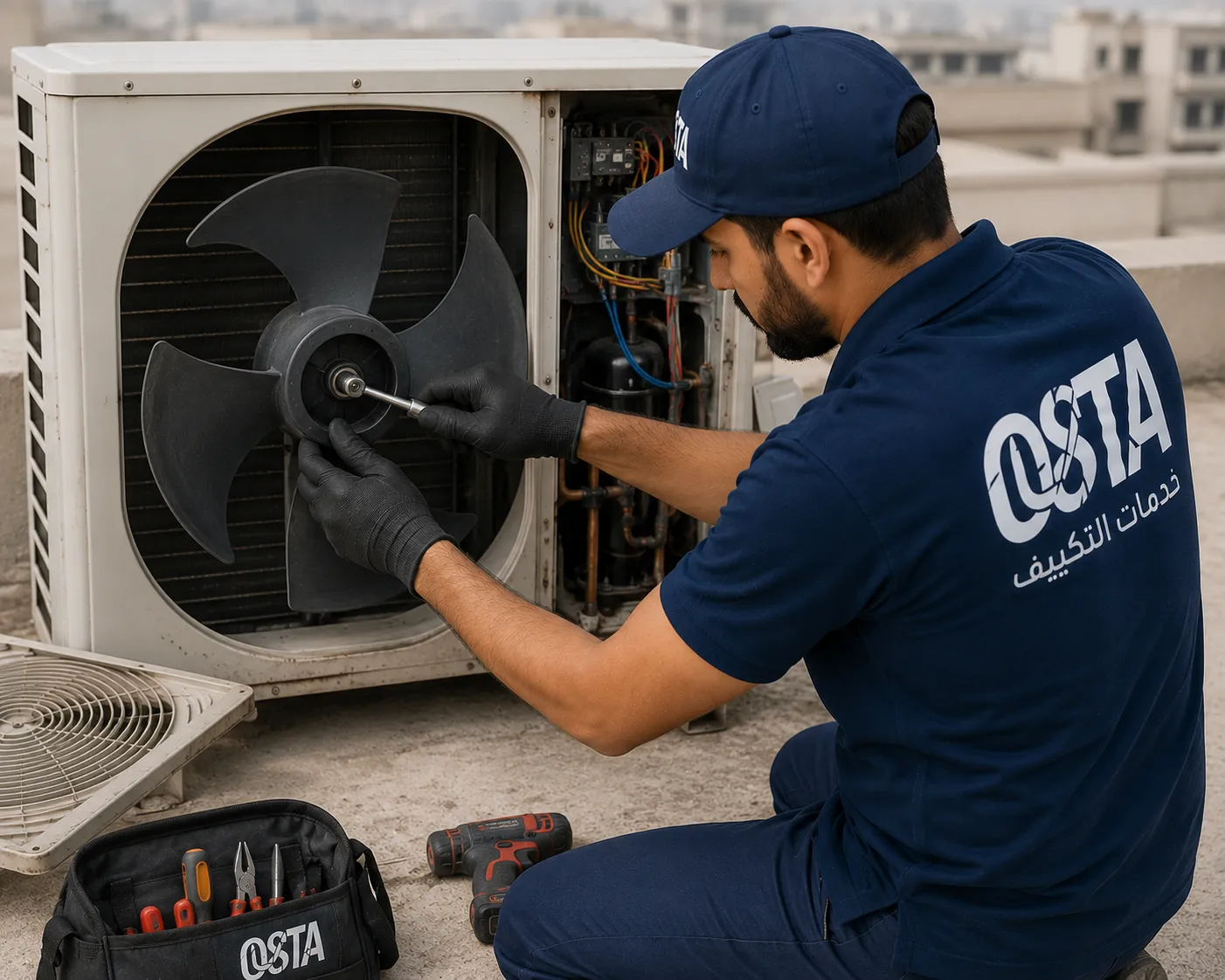
6. A Dirty Outdoor Condenser
The outdoor unit releases heat from the home. Dust, debris, or restricted ventilation around the condenser can interfere with heat transfer.
What to do: Keep the area around the outdoor unit clear. Do not open electrical compartments or clean internal components while the unit is powered.
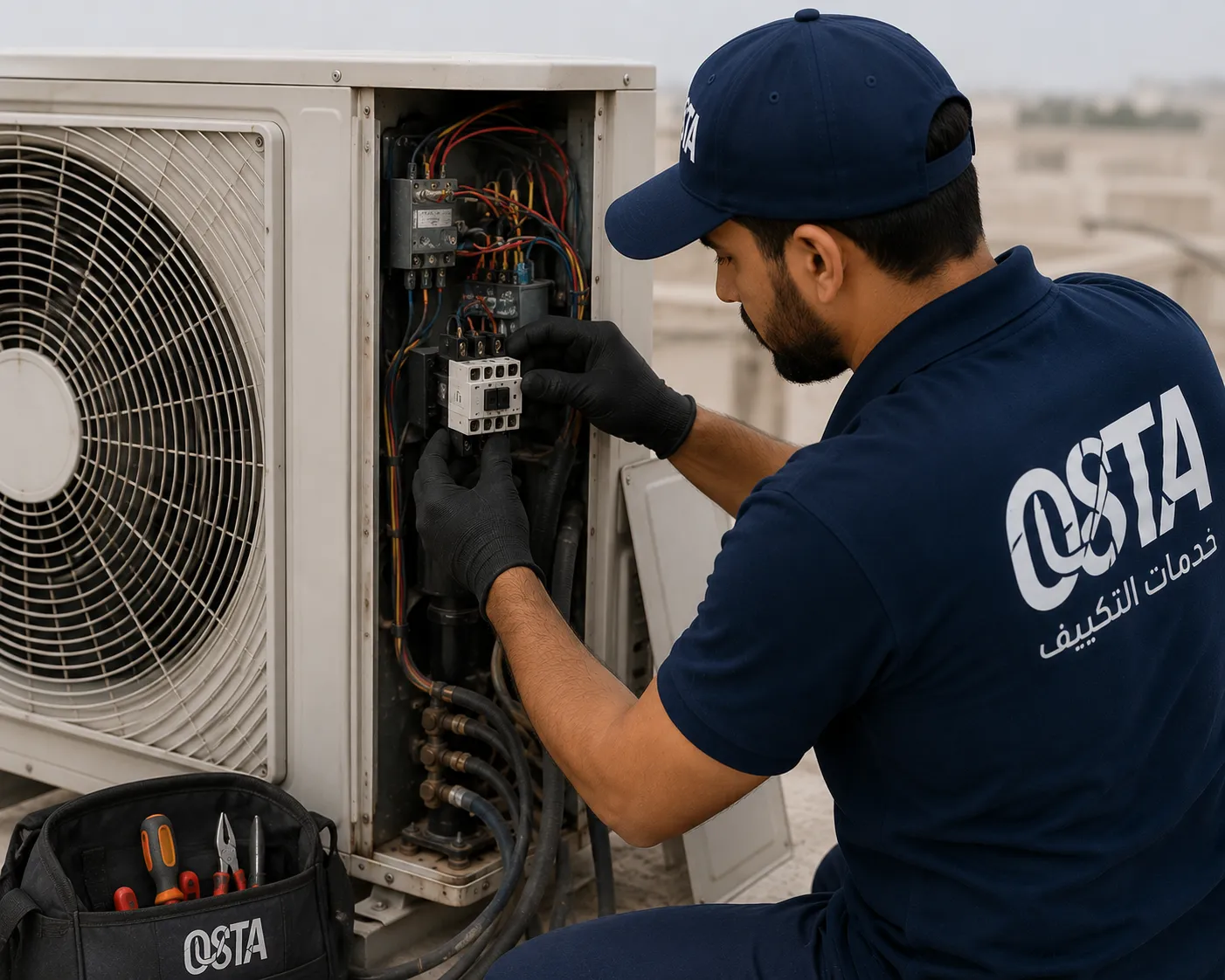
7. An Outdoor Unit That Is Not Operating Properly
In some systems, the indoor fan may run while the outdoor unit is not operating as expected. Possible causes include electrical faults, control problems, or component failure.
What to do: Observe the system from a safe distance. If the outdoor unit is silent, repeatedly stopping, or making unusual noises, arrange a professional diagnosis.
8. A Faulty Capacitor or Electrical Component
Some air conditioners rely on electrical components to start and operate motors. A failed component may prevent the compressor or fan from working correctly.
What to do: Do not open the electrical panel or attempt capacitor replacement yourself. Electrical components can remain dangerous even after power is switched off.
9. A Compressor Problem
The compressor helps circulate refrigerant through the cooling system. If it fails to start or operate correctly, cooling can be reduced or lost.
What to do: Compressor faults require proper testing. A technician should confirm the cause before recommending repair or replacement.
10. Incorrect AC Capacity for the Space
An undersized air conditioner may struggle to cool a room during hot weather, especially if the room receives strong sunlight or has poor insulation. An oversized system can also create comfort and cycling issues depending on the installation and controls.
What to do: Consider room size, ceiling height, sunlight exposure, insulation, and the cooling load before choosing a replacement unit.
11. Heat Entering Through Windows and Doors
Gaps around windows and doors, strong sunlight, and poor insulation can increase the heat entering a room. The AC may be operating but still struggle to maintain the desired temperature.
What to do: Check accessible seals, close curtains during strong sunlight, and address obvious air gaps where appropriate.
12. A Sensor, Control, or Duct Problem
A faulty temperature sensor, control issue, or leaking or obstructed duct can affect cooling performance. These problems may not be obvious from the thermostat alone.
What to do: Note which rooms are affected, whether the airflow is weak, and whether the AC switches on and off frequently. Share these observations with the technician.
Safe Checks Before Calling an AC Technician
Before booking an appointment, you can:
Confirm that the thermostat is set to Cool.
Check the filter and clean it if the manufacturer allows.
Make sure accessible air vents are not blocked.
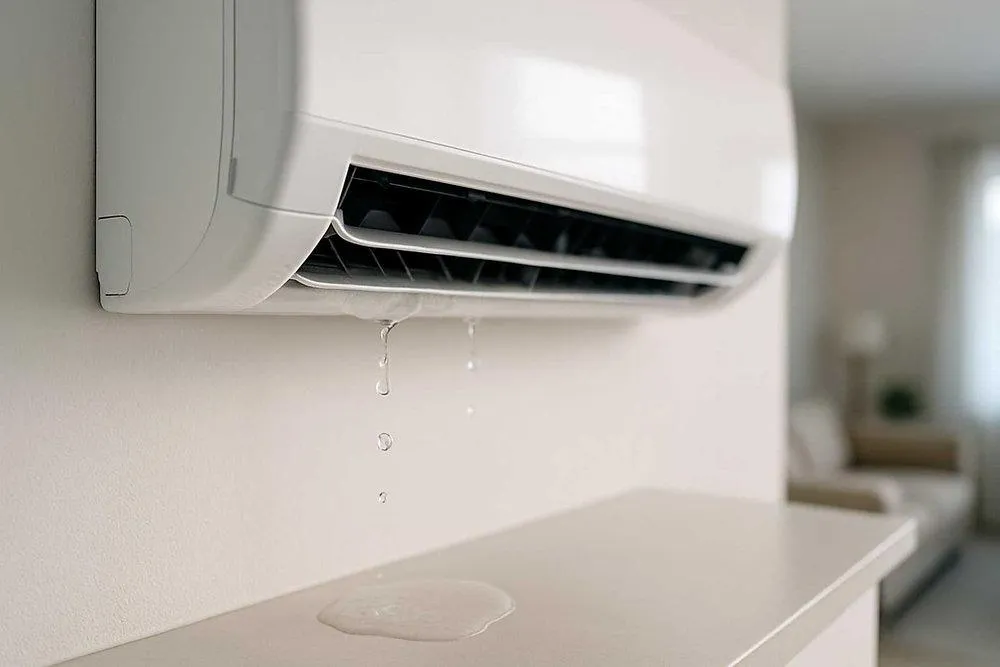
Look for visible ice or water leakage without opening the unit.
Note unusual noises, smells, error codes, or repeated shutdowns.
If you smell burning, see sparks, or suspect an electrical hazard, stop using the system if it is safe to do so and seek qualified assistance. Avoid touching exposed wiring or wet electrical equipment.
When Should You Book Professional AC Repair?
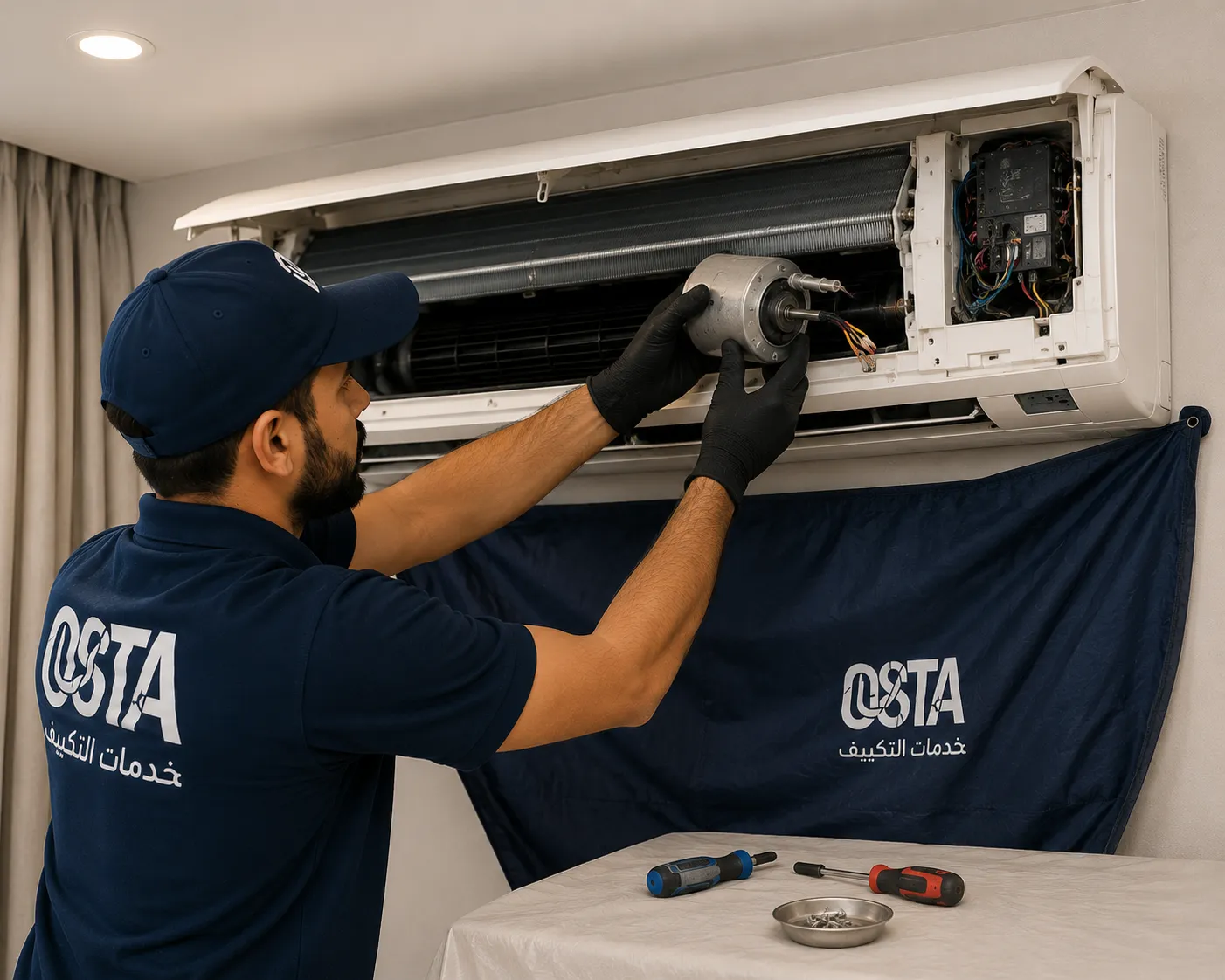
Arrange a professional inspection if the AC continues blowing warm air after basic checks, repeatedly freezes, leaks water, trips a breaker, makes unusual noises, or shows signs of a refrigerant or compressor problem.
A technician can assess the airflow, controls, electrical components, refrigerant circuit, and cooling performance to determine the appropriate repair.
Frequently Asked Questions
Why is my AC running but blowing warm air?
Possible causes include incorrect thermostat settings, restricted airflow, a dirty outdoor unit, refrigerant problems, or a component fault. The symptoms help guide diagnosis, but testing may be required.
Should I add AC gas every year?
Not automatically. A refrigerant issue should be diagnosed first. If refrigerant is low, the technician should check for leaks or other causes before charging the system.
Can a dirty filter stop an AC from cooling?
Yes. A severely restricted filter can reduce airflow and cooling performance. It is one of the simplest things to inspect according to the manufacturer's instructions.
How long should I wait before calling a technician?
After correcting a simple setting or filter issue, allow the system time to respond according to its operating instructions. If cooling does not improve, or you notice ice, leakage, unusual smells, or electrical problems, arrange an inspection.
Need Help With Your AC?
Osta Services provides AC repair and maintenance services subject to location and appointment availability. If your air conditioner is running but not cooling, share the symptoms and your location so the team can advise on the next step.
Book a service: https://www.ostaservices.com/book-now
Contact Osta Services: +971 56 867 6036
Always confirm current service availability and pricing before booking.