AC Leaking Water Inside? 8 Causes and How to Fix It
ac-leaking-water-inside-uae.webp · 22 Oct 2026
AC Leaking Water Inside? 8 Causes and How to Fix It
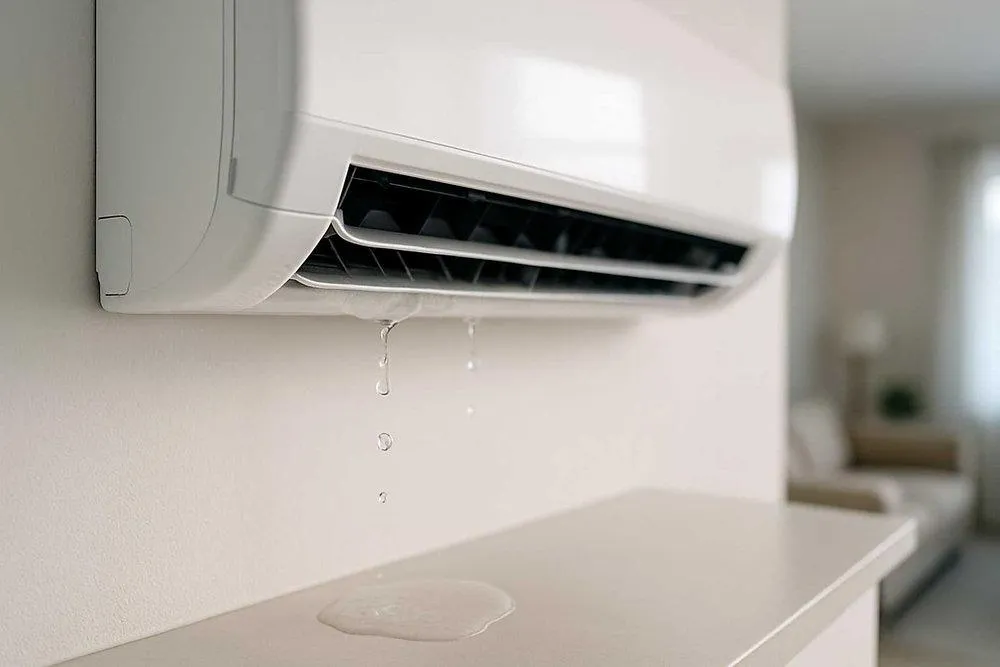
Water dripping from an indoor air conditioner can damage walls, ceilings, furniture, flooring, and electrical components. Although a small amount of condensation is normal during cooling, water dripping from the indoor unit or collecting around it is a sign that the drainage or cooling system may need attention.
In the UAE, air conditioners often operate for long periods, especially during hot and humid weather. Regular maintenance can help reduce drainage problems and identify potential faults before they cause expensive damage.
This guide explains eight common reasons why an AC leaks water inside, what you can safely check yourself, and when to contact a qualified technician.
1. A Blocked AC Drain Line
A blocked condensate drain line is one of the most common causes of indoor AC water leakage. During normal operation, moisture collected from the air drains through a dedicated pipe. Dust, algae, slime, and other debris can restrict this flow.
Common signs:
Water dripping from the indoor AC unit.
Water collecting around the air conditioner.
Leakage that becomes worse while the AC is running.
Water overflowing from the condensate tray.
What to do: Turn off the AC if it is actively leaking. Keep the surrounding area dry and arrange a professional inspection if the drain appears blocked. Avoid pushing wires or sharp objects into the drain pipe, as this may damage it.
2. A Dirty or Clogged Air Filter
A heavily clogged air filter restricts airflow across the evaporator coil. In some cases, the coil becomes too cold and ice forms on its surface. When the ice melts, excess water may overwhelm the drainage system and leak indoors.
What to do: Switch off the unit and check whether the filter is removable and user-accessible. Clean it according to the manufacturer's instructions and allow any ice to melt naturally. Never chip ice off the coil with a sharp object.
If water leakage continues after the filter is clean, a technician should inspect the airflow, coil, and refrigerant system.
3. A Frozen Evaporator Coil
Ice on the indoor evaporator coil can melt into more water than the drain tray can handle. A frozen coil may be associated with restricted airflow, a dirty coil, a fan problem, or a refrigerant-system fault.
Possible warning signs:
Ice visible on accessible parts of the indoor unit or refrigerant pipes.
Water dripping after the AC has been switched off.
Weak airflow from the vents.
Cooling performance that changes unexpectedly.
What to do: Turn off cooling and allow the ice to melt naturally. Do not continue running the AC in cooling mode while the coil is frozen. If freezing returns, arrange a professional diagnosis instead of simply adding refrigerant.
4. A Damaged or Misaligned Drain Pan
The drain pan collects condensation before it flows into the drain line. If the pan is cracked, corroded, displaced, or incorrectly installed, water may escape before reaching the drain.
This can happen in older units or after incorrect installation, repairs, or movement of the indoor unit.
Solution: A technician should inspect the pan, its connections, and the drain outlet. Depending on the damage, the pan may need to be reseated or replaced.
5. Incorrect AC Installation or Uneven Positioning
An indoor unit must be installed according to the manufacturer's specifications so that condensate flows toward the drain outlet. Incorrect positioning, poor pipe routing, or an improperly connected drain hose can cause water to collect and spill.
If the leakage started shortly after a new AC installation, relocation, or maintenance visit, mention this to the technician. The installation and drainage slope should be checked before other parts are replaced.
6. A Disconnected, Damaged, or Poorly Routed Drain Hose
A drain hose may become loose, cracked, kinked, or disconnected. Even if the drain line itself is clear, water can leak from a damaged connection or fail to reach the intended outlet.
A technician can inspect the complete drainage route, confirm that the hose is securely connected, and test that water drains correctly.
7. A Dirty Evaporator Coil or Drain Tray
Dust and organic buildup can accumulate on the evaporator coil and inside the condensate tray. This debris may contribute to restricted drainage, unpleasant smells, and recurring leakage.
Professional AC cleaning can help remove buildup and allow the technician to inspect the drainage system. Cleaning the visible exterior alone may not resolve a blockage deeper inside the unit.
8. High Humidity and Excess Condensation
Air conditioners remove moisture from indoor air. During humid weather, the amount of condensate can increase. A properly functioning system should still drain this water safely.
If the unit leaks only during periods of high humidity, the drainage capacity, pipe insulation, tray, and installation should be checked. Humidity alone should not be assumed to explain persistent indoor water leakage.
What to Do Immediately When Your AC Leaks Water
Follow these steps to reduce the risk of damage:
Switch off the AC if water is actively dripping or collecting around the unit.
Protect the area by moving furniture and electronics away from the leak.
Keep away from electrical hazards. If water is near sockets, wiring, switches, or electrical components, do not touch the wet equipment. Isolate power only if you can do so safely from a dry location; otherwise, contact a qualified electrician.
Check the accessible air filter only if the unit can be safely accessed and the manufacturer's instructions permit it.
Arrange a professional inspection if the leak persists, the coil freezes, the drain is blocked, or the source is unclear.
Do not remove electrical covers, open sealed components, or attempt refrigerant repairs yourself.
Can You Run an AC That Is Leaking Water?
It is best to switch the unit off when water is leaking indoors, particularly if the leak is heavy, recurring, or close to electrical equipment. Continuing to operate it may worsen property damage or allow a related fault to continue.
If you see ice on the coil, stop cooling and let it thaw naturally. Do not restart cooling until the underlying cause has been checked if freezing or leakage returns.
How Much Does AC Water Leakage Repair Cost in the UAE?
The cost depends on the cause, accessibility, required parts, and service location. A simple drain blockage may require less work than replacing a damaged drain pan or correcting an installation fault.
Before approving repairs, ask the service provider to identify the cause and explain the proposed work and any additional charges. Do not assume that every water leak requires refrigerant or a major component replacement.
Osta Services provides AC troubleshooting and maintenance subject to service-area coverage and technician availability. Contact the team to describe the leak and request an assessment.
How to Prevent AC Water Leakage
Clean or replace air filters at the intervals recommended by the manufacturer.
Arrange periodic AC maintenance and drainage checks.
Do not ignore weak airflow or recurring ice formation.
Make sure previous installation or repair work has not disturbed the drain hose.
Address small leaks early to help prevent damage to paint, ceilings, furniture, and flooring.
Frequently Asked Questions
Why is my split AC leaking water inside the room?
Common causes include a blocked drain line, a dirty filter, a frozen evaporator coil, a damaged drain pan, or incorrect installation. A technician can inspect the drainage system and identify the cause.
Why does my AC leak water after I turn it off?
Ice that formed while the AC was running may melt after shutdown. A blocked drain or overflowing condensate tray can also cause water to appear after the unit stops.
Can a dirty filter cause AC water leakage?
Yes. A dirty filter can restrict airflow and contribute to evaporator-coil freezing. When the ice melts, water may overflow or leak indoors.
Is AC water leakage dangerous?
It can damage ceilings, walls, flooring, and furniture. It may also create an electrical hazard if water reaches wiring, sockets, or electrical components. Keep away from wet electrical equipment.
Should I add AC gas when the unit leaks water?
Not automatically. Water leakage is often related to drainage or airflow. Low refrigerant may be associated with coil freezing, but refrigerant levels and leaks must be diagnosed by a qualified technician.
When should I call an AC technician?
Call a technician if the leak continues, the coil freezes, the drain line is blocked, water is coming through the ceiling, or you cannot identify the cause safely.
Need Help With an AC Water Leak?
Don't let a small leak turn into expensive property damage. Contact Osta Services to request AC inspection or maintenance, subject to service availability in your area.
Book a service: https://www.ostaservices.com/book-now
Call or WhatsApp: +971 56 867 6036
Osta Services — practical AC and home maintenance support in the UAE.